A remote role removes the commute and widens your options beyond your own city. It also widens the competition: an opening that would get applicants from one metro now gets them from across India, and sometimes from other countries. Finding remote work is less about luck and more about looking in the right places and making your application easy to say yes to.
Know which kind of remote you are looking for
"Remote" covers several arrangements, and postings are not always clear about which one they mean. Before applying, check which of these it is:
- Fully remote within India, often with a requirement to be in certain states for payroll or tax reasons.
- Remote-first with occasional travel to an office for team meetings or onboarding.
- Hybrid, with two or three office days a week, which is sometimes mislabelled as remote.
- Remote for a foreign company, either on their payroll through an employer-of-record service or as a contractor.
Where to look
Use more than one source, because different employers post in different places.
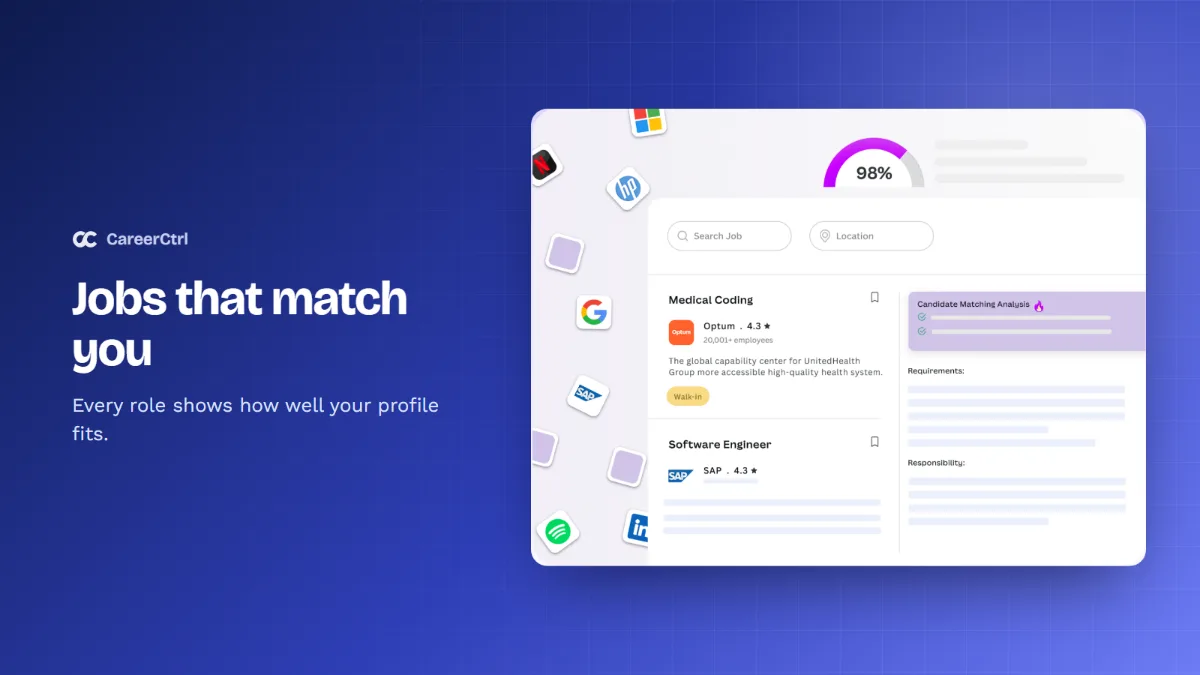
- Job platforms with a work-mode filter. On CareerCtrl Jobs you can filter by work mode alongside location and experience, then save roles to compare later.
- Company careers pages. Remote-first companies often list roles on their own site first. Make a list of companies whose products you know and check them weekly.
- Professional networks. Many remote roles are shared by hiring managers and team members before or instead of being posted widely.
- Communities around your skill, such as open-source projects, design communities or developer meetups, which often run job channels.
Show that you work well remotely
A remote hiring manager is asking one extra question: will this person get things done without someone checking in? Your application should answer it before they ask.
- Mention remote or distributed work you have already done, including college projects run over chat and video calls.
- Show written communication: a clear cover note, a project write-up or a well-documented GitHub repository.
- State your working hours and time-zone overlap if the team is abroad. "Available until 9 pm IST for overlap with European teams" removes a doubt early.
- Note your setup briefly if relevant: reliable broadband, a backup connection and a quiet place to take calls.
Spot remote job scams
Remote roles attract fraud because the employer never has to meet you. Be cautious if you see any of these:
Genuine job
- An interview with a real person, on a company email or video call
- An offer letter on company letterhead before you share documents
- No fees of any kind, ever
- The role is listed on the company's official careers page
- Pay in line with similar roles
Likely a scam
- Any request for money: registration fees, training fees, a refundable deposit or equipment you must buy from them.
- An offer without an interview, or an interview held only over a messaging app.
- Pay that is far above the market for simple tasks like liking videos, rating products or data entry.
- Emails from free email addresses claiming to be a large company, or a domain that is slightly misspelt.
- Pressure to decide immediately or to share Aadhaar, PAN or bank details before an offer letter.
When in doubt, find the company's official website yourself, rather than following a link from the message, and check that the role is listed there or that the recruiter is real.
Interviewing remotely
Treat the video interview like an in-person one. Test your camera, microphone and connection beforehand, keep a copy of your resume and the job description open, and have a short answer ready for "How do you organise your work when no one is around?" Concrete habits, like a daily task list or end-of-day updates, are more convincing than general claims.
Search remote jobs: Search openings across India, filter by work mode and see how well each role matches your profile.